- Details
In our series "A conversation with..." this time we talked to Dana Kapitulčinová, who is the sustainability manager at Jan Evangelista Purkyně University in Ústí nad Labem (UJEP). She shares insights into UJEP's approach to sustainability, points out her key challenges, and reflects on opportunities for transforming higher education.
- Details
The Ukrainian National Forestry University (UNFU) has once again reaffirmed its strong standing in sustainable development, ranking among the world's leading universities in the UI GreenMetric World University Rankings 2026.
- Details
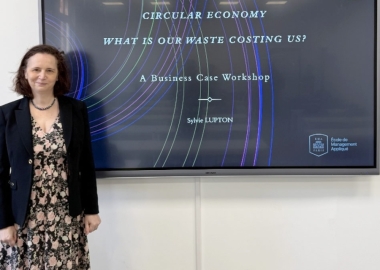
As part of European Sustainable Development Week, EMA Business School hosted an interactive workshop exploring an increasingly important question for organisations: What is our waste really costing us?

- Details
The next CA Exchange is coming up! With this webinar series we highlight great activities in our network and foster interaction and exchange between colleagues from different member institutions and beyond. On 7 October 2026, 12.30-14.00 CET, we'll introduce the course Lead to Learn, which is part of the new learning platform TheLEN – The Learning Edge Nexus. Please register by 6 October 2026.
- Details
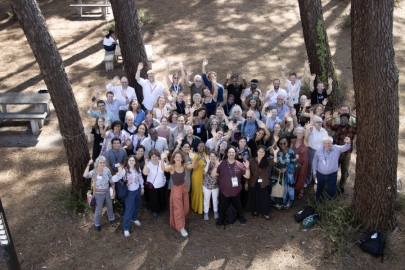
The 2026 Higher Education Summit was another exceptional experience. From 26-28 August, around 100 colleagues and friends from all over the world joined the exchange on "Unleashing Transformative and Decolonised Education for Sustainability in a Globalised World". The summit was filled with special moments, inspiring encounters and thought-provoking discussions initiated by our keynote speakers Darren Axe, Daniel Fischer, Blanchard Nsuka, Irène Pereira, Mandy Singer-Brodowski, Noah W. Sobe, Zintle Songqwaru, and many more. Photos and additional materials are available on the conference website.
- Details
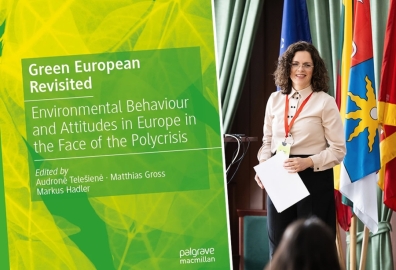
Edited by Audronė Telešienė (Kaunas University of Technology), Matthias Gross (Helmholtz Centre for Environmental Research) and Markus Hadler (University of Graz), this book examines how environmental attitudes and behaviours are evolving across Europe amid climate, health, economic, energy and other crises. Drawing on decades of ISSP Environment data, it combines longitudinal trends, cross-national comparisons and sociological analysis to explore changing worldviews, lifestyles and societal responses to environmental challenges.

- Details
How can students be encouraged to develop positive visions of the future for their own discipline and to map out pathways towards them? Zukunftswerk offers lecturers a flexible learning module that does just that. In four steps, students jointly develop ideas of a sustainable future while reflecting on their own perceptions, values and actions as well as those of others. The module requires no prior knowledge of sustainability, is designed for two to three sessions, and can be flexibly integrated into existing courses.
- Details
TheLEN – The Learning Edge Nexus – is a new learning ecosystem where vision meets real action. Many of us look for learning that goes beyond knowledge: learning that changes perspective. Whether you're growing personally or strengthening your organisation, TheLEN offers experiences designed to deepen practice, broaden perspectives, and close the gap between vision and reality. The COPERNICUS Alliance is proud to be a co-founder, alongside Legacy17, Global Action Plan Spain, InEuropa, and others.
- Details
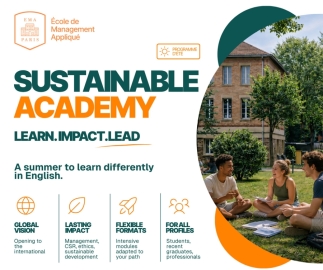
As the global landscape evolves, the demand for sustainable leadership and robust legal compliance has never been more urgent. This summer, the École de Management Appliqué (EMA) in Paris is proud to host a specialized four-part seminar series designed for professionals, advocates, and forward-thinking leaders eager to master the complexities of modern international business.
- Details
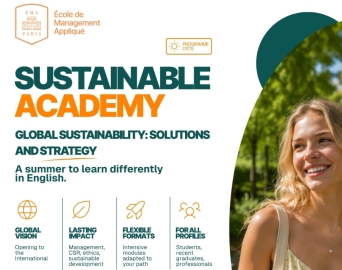
Paris is calling this summer! Students can imagine spending their summer mastering Sustainable Decision-Making during the day and exploring La Seine during the evening. The Sustainable Academy is a programme, offered by the École de Management Appliqué (EMA) in Paris. It provides the perfect track for any goal - from 2-week "Discovery" seminars to an immersive "Bridge Term" programme in partnership with La Sorbonne and EnglishPath.
- Details
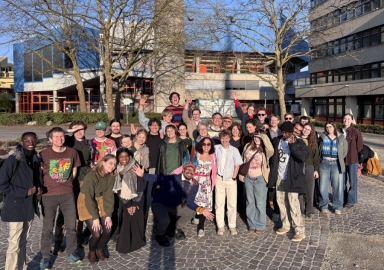
This year’s SOS International Summit, "Student voices for a safe and just transition", took place 18-21 March 2026, hosted at the University and Green Office Konstanz, Germany. Despite the challenging financial backdrop facing higher education, over 70 student and staff delegates came together for an engaging and energetic program of keynotes, workshop sessions and panel discussions focused on the critical role of student-staff collaborative structures in Higher Education Sustainable Development.
- Details
In our series "A conversation with..." this time we talked to Jule Neumann, who is currently Vice-President at oikos International and recently joined the COPERNICUS Alliance Advisory Board. She talks about being a role model and how young people can create real change.
- Details
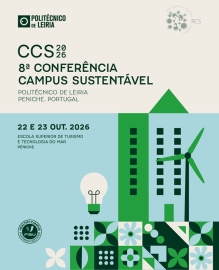
Organised by the Sustainable Campus Network (Portugal), the 8th Sustainable Campus Conference (CCS2026) will take place from 22-23 October 2026 in Peniche. Under the theme "What future for sustainable campuses?", CCS2026 brings together the academic community and offers a platform for collaboration and exchange on topics such as sustainability education, social inclusion, circular economy, energy and mobility, and digital solutions for greener campuses. While the conference will be primarily held in Portuguese, abstracts may be submitted and presentations delivered in English. Abstract submission deadline: 30 June 2026.
- Details
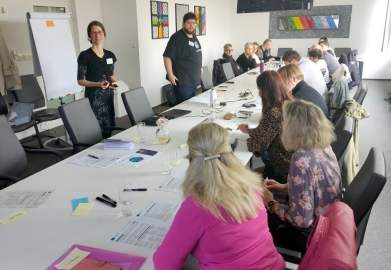
Jan Evangelista Purkyně University in Ústí nad Labem (UJEP) has successfully concluded a series of five participatory workshops, integrating ESG principles into the university's core. This collaborative milestone drives the development of its Sustainability Strategy 2026–2030. UJEP is currently finalizing a comprehensive ESG analytical report, identifying key strengths and essential development areas. As it transitions from project-based initiatives to integrated strategic management, it remains dedicated to data-driven transparency and actively seeks to exchange best practices and insights with other leading European universities.
- Details
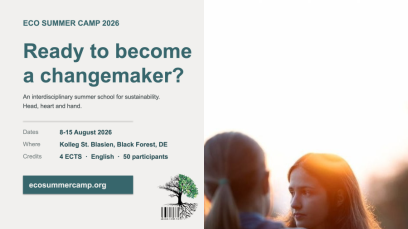
From 8-15 August 2026, the Eco Summer Camp brings 50 students, young professionals and lifelong learners from over 20 countries to Kolleg St. Blasien in the Black Forest for a week of interdisciplinary learning on sustainability. The programme integrates head, heart and hand, offers 4 ECTS through the Newman Institute Uppsala, and is held in English.
- Details
The CA is glad to be again a promotional partner of the Sustainability Education Forum (SEF) hosted by AASHE (Association for the Advancement of Sustainability in Higher Education) from 4-5 June 2026. The SEF provides a space to tackle the challenges of rising anxiety, political backlash, and systemic barriers to sustainability work. It uses an Open Space Technology format, where participants co-create the session agenda, alongside pre-scheduled sessions focused on climate justice and cultural climate change.

- Details
The Ukrainian National Forestry University consistently implements the principles of sustainable development, environmental responsibility, and green governance, as evidenced by its results in the international UI GreenMetric World University Rankings. According to the latest evaluation results, UNFU has ranked 1st among higher education institutions in Ukraine for the 8th consecutive year, demonstrating a high level of compliance with international sustainability criteria.

- Details
In 2026, oikos International is launching a renewed vision: supporting student-led initiatives that are long-lasting and truly impactful. The new Chapter Incubator is an 8-week, hands-on program designed to support business and economics students in founding new oikos chapters at their universities. Participants develop the skills, structures, and strategic direction needed to build chapters that create sustained impact beyond one academic year. oikos International is seeking institutional partners to launch this new program in collaboration with seven committed universities.
More Articles …
- Resources for climate resilience education
- Understanding transformation: KTU researchers contribute to the UN’s GEO-7 environmental outlook
- 10th International KTU PhD Summer School
- Out and about sustainably in Bern – new English version 2026
- Free learning events at TheLEN
- KTU among the top 25 % of the world’s most sustainable universities
- CA welcomes new Leadership Team
- "Sustainability Starts With Teacher Leaders"
- Project DigiCLIL-Exchange: open educational resources for global classrooms
- Leuphana University announces appointment of Prof. Harald Hantke as UNESCO Co-Chair
- CA Exchange: "Cycling to Care – Intergenerational Well-being and Climate Resilience on the Move"
- Universities promoting regional sustainability: the RCE concept