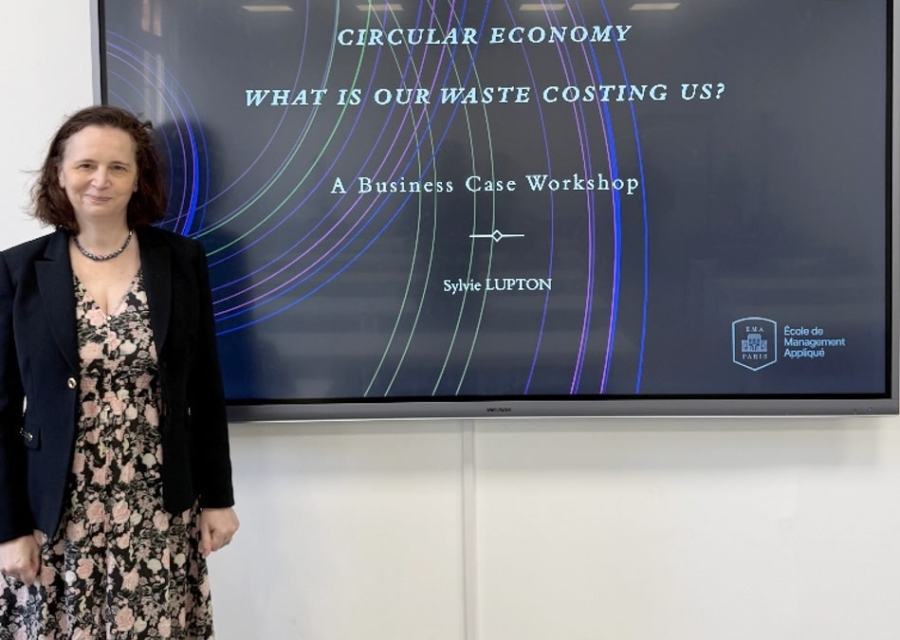
As part of European Sustainable Development Week, EMA Business School hosted an interactive workshop exploring an increasingly important question for organisations: What is our waste really costing us?
The session, "Circular Economy at EMA: What Is Our Waste Really Costing Us?", brought sustainability and business thinking together, encouraging students to look at waste not simply as something to dispose of, but as an opportunity to rethink how organisations use resources, reduce costs and create value.
Understanding Waste Through a Different Perspective
Led by Sylvie Lupton, an expert in waste economy, the 90-minute workshop introduced students to the principles of the circular economy through a practical business perspective. The session explored how waste-sorting practices work in France and how they compare with approaches in other countries. This international perspective encouraged students to consider how different systems, habits and approaches can influence the way waste is managed.
Looking at Waste on the EMA Campus
The workshop also brought the discussion closer to home by examining how waste sorting takes place on the EMA campus. Rather than discussing sustainability only as a theoretical concept, students were encouraged to observe and question everyday practices. This helped connect broader environmental challenges with the decisions and behaviours that take place within an organisation.
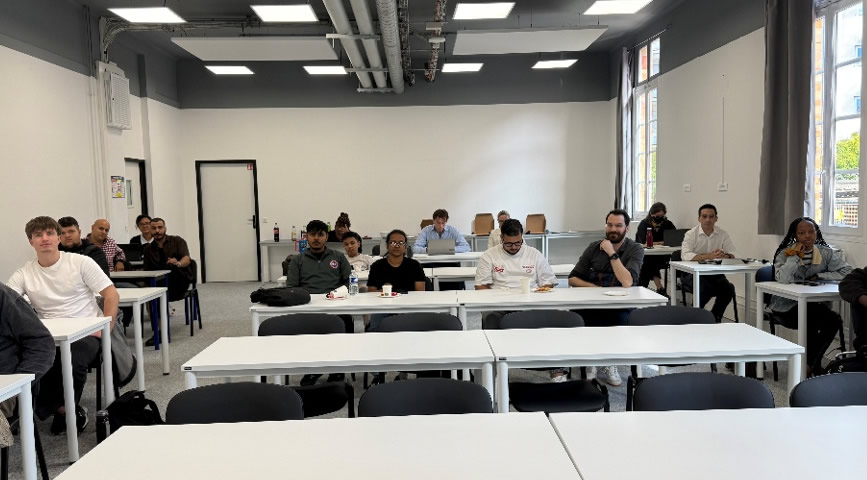 From Sustainability to Business Solutions
A key part of the workshop was challenging students to think about the business case for circular economy practices. How can an organisation reduce the amount of waste it produces? How can it lower costs while becoming more sustainable? And how can resources that are often considered waste be managed differently to create greater value? By approaching these questions from a business perspective, students were able to explore how sustainability can become part of organisational decision-making and strategy.
Learning to Think Differently About Waste
The workshop highlighted an important message: Sustainability is not only about environmental responsibility. It can also be about efficiency, innovation, cost reduction and creating long-term value.
For EMA students, the session provided an opportunity to connect classroom learning with a real-world sustainability challenge and to consider how future managers and organisations can contribute to more circular ways of working.
EMA Business School believes that preparing students for the future of business means encouraging them to question existing practices, explore new solutions and think differently about the challenges facing organisations and society. Because sometimes, the first step towards creating value is simply looking at what we usually throw away differently.